
The Trusted Compute Initiative: Advancing Innovation and Collaboration Through C-SIPA
Artificial intelligence now depends as much on physical infrastructure—such as datacenters, advanced chips, high-performance networking, and cloud platforms — as it does on models and algorithms. As Bahrain and its Gulf neighbors invest rapidly in AI infrastructure, the question of whose technology underpins it and how the AI supply chain is secured has become central to both national security and economic prosperity.
This project was generously funded by the US State Department
Project Description: For much of the past decade, leadership in AI was understood as a contest over models and talent. However, this contest has moved downstream to the infrastructure layer, where access to compute increasingly limits the ability to train AI at scale. Today, AI capability rests on a physical foundation — the datacenters, advanced semiconductors, high-bandwidth networking, and cloud platforms that train and run modern systems. Control over that foundation has become a primary axis of strategic competition. Whoever builds, secures, and governs this layer shapes who can develop and deploy AI, on what terms, and with what dependencies.
The Gulf region has been actively building critical AI infrastructure. U.S. cloud and compute firms have established and expanded infrastructure across the region, and Bahrain — an early adopter, with a government that was among the first in the Middle East to migrate to the commercial cloud — is positioning itself as a digital and AI hub aligned with national diversification goals. This rapid buildout creates an opportunity to pair the region's infrastructure investment with systematic analysis of the broader AI supply chain that underpins it: the provenance and trustworthiness of hardware, the security of networking and orchestration layers, the concentration of critical dependencies, and the resilience of these systems against coercion or compromise by strategic competitors. By examining these dimensions together, C-SIPA partners can ensure the region's AI infrastructure is built not only for speed and scale, but for long-term resilience and trust.
Over the next 18 months, this project will establish an enduring U.S.–Bahrain–UK research collaboration on securing the AI compute supply chain, producing a joint assessment that directly informs the regional infrastructure strategy and builds lasting capacity between U.S. industry and research institutions across the C-SIPA partner countries.
Are LLMs Transforming Cybercriminal Operations? A Study of LLMs on Dark Web Marketplaces
This project examines the emergence of “dark LLMs,” AI models marketed or shared on the dark web for activities such as phishing, malware development, fraud, and other forms of cybercrime. It maps this growing ecosystem, develops a typology of these tools and their intended uses, and assesses whether they are meaningfully transforming the accessibility, scale, and sophistication of cybercriminal operations.
This project was generously funded by the UK AI Security Institute from 2025-2026.
About the Project
Recent innovations in artificial intelligence (AI) and Large Language Models (LLMs) have transformed many aspects of society—including crime. Criminals have creatively adapted widely available AI applications to develop malware, create customized phishing attacks, analyze intelligence gathered from surveillance, and even draft text for romance scams. However, despite several notable incidents, some skeptics contend that the use of LLMs in facilitating cybercrime is overstated, driven more by speculation rather than by measurable evidence.
One way to assess the use of AI and LLMs in cybercrime is by examining the illegal marketplaces where these tools are bought and sold. In recent years, cybercriminal activity—carried out by state-backed actors, organized criminal groups, and individuals—has become increasingly professionalized and democratized. With the rise of ransomware-as-a-service and dark web markets that sell exploits, malware, and other tools, cybercrime has become more accessible, scalable, and sophisticated. Accordingly, the emergence of LLMs within this context aligns with these broader trends, democratizing access to these tools and increasing the reach and complexity of cybercriminal operations.
This trend is already beginning to take shape. Several so-called “dark LLMs” have emerged for sale on dark web markets, with prices ranging from $50-$5,000. Models such as FraudGPT, WormGPT, DarkGPT, and ruGPT are marketed specifically for malicious use, including creating targeted phishing messages, developing malware, and generating child sexual abuse material. Despite the growing marketplace for dark LLMs, more systematic research is necessary to better quantify, measure, and understand the emergence and impact of these tools on cybercriminal operations.
This project aims to build a centralized body of knowledge that tracks the rise of dark LLMs for sale or shared on the dark web and intended for cybercriminal use. Specifically, we aim to: (1) map the presence of dark LLMs; (2) create a typology of dark LLMs, including their intended uses; (3) assess the utility and application of dark LLMs within cybercriminal operations; and (4) offer an assessment of dark LLMs’ potential to transform the cybercriminal ecosystem.
Workshop
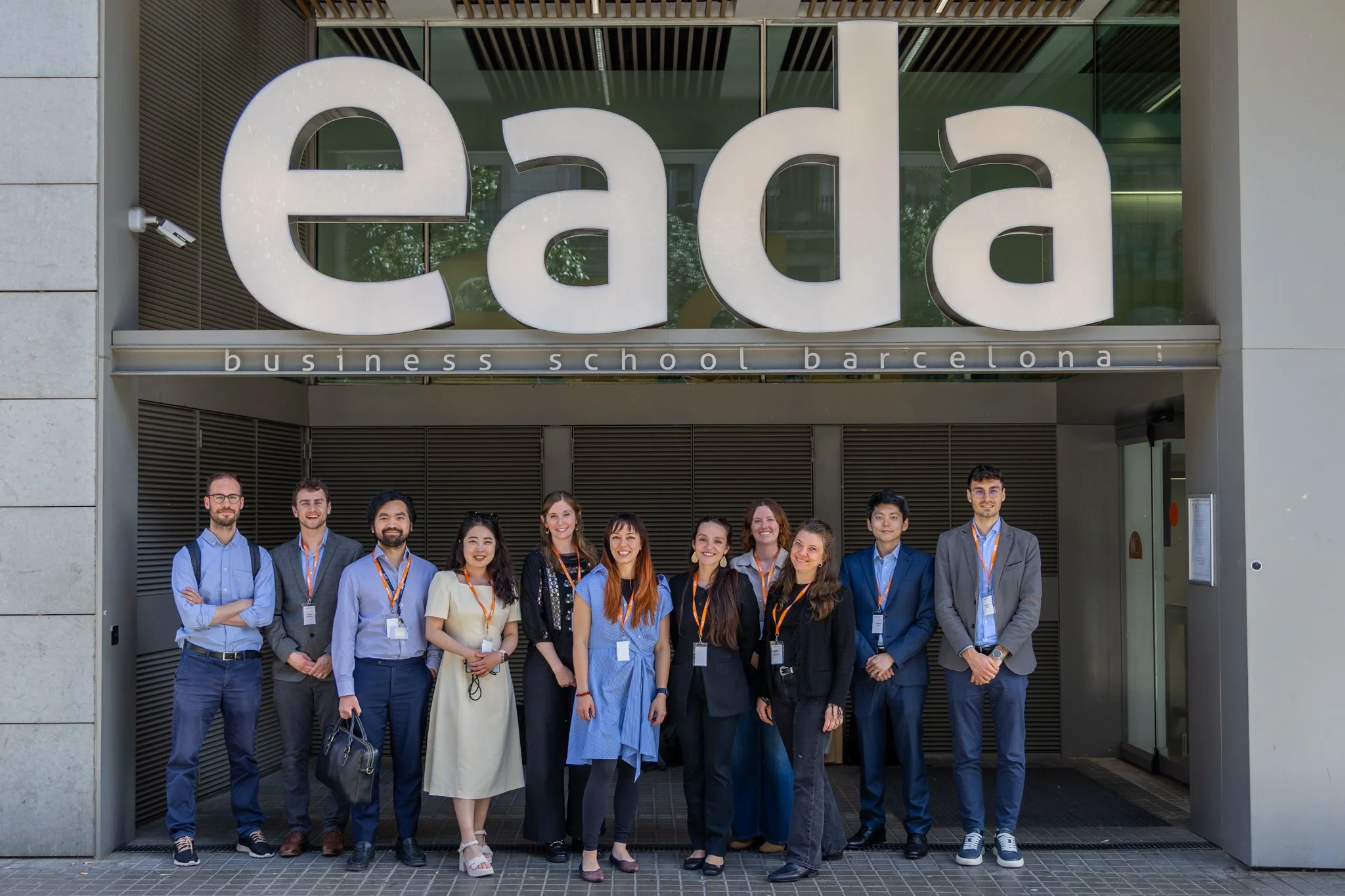
In April 2026, CSINT and the Middlebury Institute of International Studies at Monterey convened a two-day workshop at EADA Business School in Barcelona, bringing together scholars working at the intersection of artificial intelligence and cybercrime. While the diffusion of AI into criminal ecosystems is widely assumed, the actual adoption patterns — which tools are used, by whom, and to what effect — remain undertheorized and thinly evidenced. Papers presented across three sessions examined AI-enabled state revenue operations and influence campaigns, the shifting organizational and economic dynamics of cybercriminal networks, the fragmented international regulatory picture, as well as our research on the jailbreak techniques circulating in underground forums.
Read the full agenda here.
Publications and Conferences
Stay tuned for the articles that come out of this research. In the meantime, you can catch our paper presentation at the Stanford Trust and Safety Research Conference in Fall 2027.

AI Infrastructure & Society Initiative
The AI Infrastructure & Society Initiative examines the material foundations of artificial intelligence, including where computing infrastructure is built, whose land, water, and energy it consumes, and who participates in the decisions governing its expansion. Combining large-scale empirical analysis with critical infrastructure research, the initiative equips policymakers and civil society to address the environmental, social, and distributional consequences of the AI buildout.
This project was graciously funded by American University’s Competitive Internal Grant Program (Exceptional Faculty Research Award, 2025).
The AI Infrastructure & Society Initiative examines artificial intelligence as physical infrastructure: the land, water, energy, and communities required to sustain it. It asks who bears the costs of the AI buildout, who captures its benefits, and who has the power to set its rules.
Combining large-scale quantitative analysis of data center siting in the United States with critical and qualitative infrastructure research, the initiative traces how the expansion of computing capacity is transforming agricultural and rural landscapes, concentrating environmental burdens in particular communities, and shifting consequential decisions about energy and water into zoning hearings, utility negotiations, and other forums rarely treated as part of AI policy. It extends this analysis to emerging frontiers, including nuclear-powered, undersea, and orbital data centers, where promises of limitless computing capacity often relocate resource constraints, environmental risks, and questions of jurisdiction rather than resolving them.
The initiative is designed to inform policy and public debate. Its research provides regulators, legislators, and civil society with the evidence needed to govern the material foundations of AI, including measurable patterns in facility siting and land use, rigorous assessments of environmental and distributional impacts, and governance frameworks that treat social and environmental consequences as central questions of AI policy rather than externalities to be addressed after the fact.

Mainstreaming Trust & Safety in Online Gaming
In collaboration with the Center for Democracy & Technology and the NYU Stern Center for Business and Human Rights, this project examined how trust and safety practices in online games can inform the governance of digital platforms more broadly. The collaboration brought together experts from industry, civil society, government, and academia for a public workshop and produced a series of five essays and a white paper on pro-social design, content moderation, privacy, child safety, and community governance.
This work was generously supported by the CTD and the NYU Stern Center for Business and Human Rights
Online games are important spaces for entertainment, creativity, and social connection, yet they remain largely absent from mainstream debates about digital rights, platform governance, and online safety. In collaboration with the Center for Democracy & Technology and the NYU Stern Center for Business and Human Rights, this project explored how the experiences of the gaming industry could inform more effective and rights-respecting approaches to trust and safety across digital platforms.
The collaboration began with a public workshop that brought together experts from the gaming industry, civil society, government, and academia to examine the distinctive trust and safety challenges facing online games. Discussions focused on how games and social media confront many of the same problems, including harassment, privacy risks, harmful design practices, child safety, and content that moves across platforms, while also considering what each sector could learn from the other.
The project produced a series of five expert essays examining pro-social and universal design, privacy-preserving moderation, youth well-being, and community-led governance. It also resulted in the white paper Trust, Play, and Platforms: Sharing Lessons for Safer Digital Spaces, co-authored with Dean Jackson. Together, these publications argue for moving beyond reactive and punitive approaches to content moderation toward systems that build safety into platform design, support healthy community norms, protect user autonomy, and recognize the social benefits of online play.

Event poster, Mainstreaming Trust & Safety in Online Games